
Dental Fillings
Restore Your Smile’s Health: Our Dental Fillings Safeguard Your Teeth While Preserving Your Natural Teeth
Dental Fillings Waurn Ponds, Geelong

When tooth decay forms it is necessary to receive a filling to stop the spread and to regain the strength of your original tooth. We perform a full assessment of your teeth and help you provide and understand choices to make an informed decision for your tooth restoration.
If you suffer from dental cavities, it is crucial to get them treated as soon as possible. Cavities and tooth decay happens. And when they do, you have plenty of options to help repair damaged teeth or stop further decay. The most popular way of treating dental cavities is through dental fillings.

What Are Dental Fillings Used For?
Dental fillings are used to restore decayed and damaged teeth. It restores the affected tooth’s shape, size, function and strength. It also prevents the risk of further infection. Dental fillings are also used to restore and rebuild broken or cracked teeth and teeth that have been worn down.
Types Of Dental Fillings
There are many reasons why dental implants are fast becoming the preferred option for tooth replacement. A few of the main benefits are highlighted below:
Metallic Fillings
In the past, silver amalgam was the most common dental filling material. It is still used, but its popularity and desirability have been reduced owing to its drawbacks. Silver amalgam fillings look metallic, discolour the tooth, are not aesthetically pleasing and compromise the appearance of the tooth. Moreover, silver amalgam tends to expand and contract, which can lead to tooth fractures and pain.
Apart from silver amalgam, cast gold fillings were also popular. However, they are expensive and again affects the appearance of the tooth.
Tooth coloured fillings
Owing to the drawbacks of metallic dental fillings, tooth coloured fillings were introduced. Currently, the most used type of dental fillings is tooth coloured dental composite resins. Composite can be manipulated to match the natural tooth shade and offer a more natural appearance. In addition, they provide excellent biocompatibility and are suitable for everyone. Moreover, composite resins bond with the tooth and offer a more conservative approach to restoring dental cavities than metallic fillings. Dental composite fillings can last up to 15 years with proper care.
Other types of tooth coloured filling are glass ionomer cement and ceramic fillings. However, they have a less natural appearance and are not as durable as composite fillings.

How Are Dental Fillings Done?

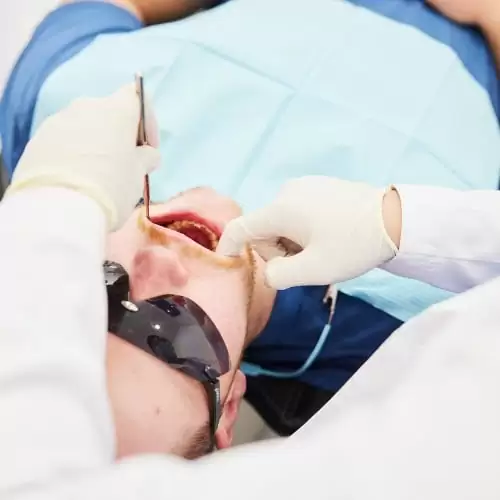
During your first appointment, our dentist will conduct a thorough oral examination and take some dental x-rays. If they spot a dental cavity during your examination, we will suggest you go for a dental filling.
The process starts with cleaning the tooth from any decay. Often, the dentist will give you some local anaesthesia to help minimise discomfort during the process.

Once the tooth has been cleaned of decay, they will use the dental filling of your choice and start restoring the tooth. The tooth is restored in detail, and later they will carve the filling to imitate the tooth’s former structure.

After this, your dentist will check your bite to see any high points; once they are done with this, the filling will be polished. This completes the process of dental fillings. At times, when the dental cavity is relatively large, your dentist may recommend a dental crown to ensure proper restoration of strength and function.
Risks & Recovery
Dental fillings are a routine way to restore teeth affected by decay or damage, but they come with some risks and recovery considerations.
Possible risks include:
- Temporary sensitivity to hot, cold or pressure after placement
- Gum irritation near the treated tooth
- Risk of filling fracture or wear over time
- Rare chance of needing further treatment, such as a crown or root canal, if the tooth is more compromised than expected
Recovery considerations:
- Most patients return to normal activities immediately
- Mild sensitivity usually settles within a few days
- Avoiding very hard or sticky foods can help protect new fillings
- Regular check-ups support long-term success of the restoration

Download Our Price List
We prioritise transparency by providing a downloadable price list that outlines our services and costs, empowering you to make informed decisions about your dental care. Our friendly staff is available to address any questions you may have regarding pricing or payment options.

What Happens When Dental Cavities Are Left Untreated?
Dental cavities are notorious for progressing silently and destroys the tooth structure. If left undiagnosed and untreated, it can progress to involve the inside of the tooth, which necessitates invasive dental treatment like a root canal treatment. You may eventually lose your tooth if the damage is extensive. In some cases, the infection can even involve the jawbone and neck spaces leading to cellulitis, a medical emergency.
Therefore, it becomes imperative to get dental cavities treated and restored with the help of dental fillings as soon as possible.
If you think you may have a dental cavity, do not delay visiting your dentist. Please schedule an appointment with us today and embark on your journey to better oral health.


Frequently Asked Questions
Why is my tooth sensitive after a filling?
Temporary sensitivity to hot, cold, or biting pressure is common after a restoration. This usually improves within a few days to weeks.







Book Appointment
Our gentle and experienced team at Dove Dental will walk you through your options and help you make an informed decision about your tooth restoration.
DISCLAIMER:
The material posted is for informational purposes only and is not intended to substitute for professional medical advice, diagnosis or treatment. Results vary with each patient. Any dental procedure carries risks and benefits. If you have any specific questions about any dental and/or medical matter, you should consult your dentist, physician or other professional healthcare providers.