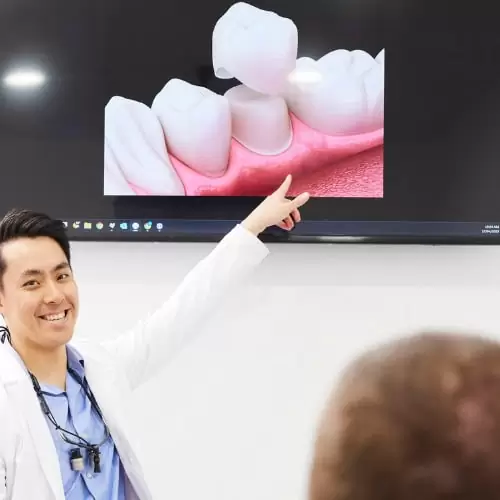
You’ve just completed root canal treatment, and your dentist mentions that you’ll need a crown after root canal treatment. Your immediate thought might be “another procedure?” followed quickly by “is this really necessary?” It’s a common reaction, especially when the tooth feels fine and the root canal has eliminated your pain.
The reality is that not every tooth requires a crown after root canal treatment, but many do. The decision depends on several factors including which tooth was treated, how much natural tooth structure remains, and your individual risk factors.
At Dove Dental in Waurn Ponds, we see many patients who are uncertain about post-root canal restoration choices. While some teeth can be adequately restored with fillings, others may benefit from crown protection. However, it’s important to understand that no restoration can guarantee long-term success, and individual outcomes vary significantly.
Why Root Canal Treated Teeth May Need Special Protection
Root canal treatment removes the tooth’s nerve and blood supply, fundamentally changing its structure and properties. This process can affect the tooth’s strength and durability, though the extent varies between individuals and specific teeth.
Changes After Root Canal Treatment:
- Removal of pulp tissue may reduce tooth moisture content
- Access cavity creation removes additional tooth structure
- Some teeth may become more brittle over time
- Reduced sensation may lead to increased bite forces
According to the Australian Dental Association, posterior teeth that have undergone root canal treatment have higher failure rates when restored with large fillings compared to crowns. However, this doesn’t mean all such teeth require crowns, and some may function well with alternative restorations.
Some patients maintain root canal treated teeth with fillings for decades, while others experience fractures within months. Factors including bite force, grinding habits, tooth position, and remaining tooth structure all influence outcomes.
When Porcelain Crowns Are Typically Recommended
The decision for a crown after root canal treatment depends on several clinical factors, though recommendations may vary between dental practitioners.
Common Indications for Crowns:
- Posterior teeth with large access cavities
- Teeth with significant pre-existing fillings or damage
- Teeth subject to heavy chewing forces
- Patients with bruxism (grinding or clenching habits)
- Teeth with thin remaining walls of tooth structure
Front Teeth Considerations: Front teeth may not always require crowns after root canal treatment, particularly if minimal tooth structure was removed. However, discolouration following treatment may influence restoration choices for aesthetic reasons.
Dentists evaluate remaining tooth structure, bite relationships, patient habits, and aesthetic concerns when making restoration recommendations. However, even thorough assessment cannot guarantee which option will provide the best long-term outcome.
Alternative Restoration Options
A crown after root canal treatment isn’t always the only option. Several alternatives may be suitable depending on individual circumstances, though each carries different risks and benefits.
Large Composite Fillings: Modern composite materials can restore significant tooth structure and may be suitable for some root canal treated teeth. However, large fillings may be more prone to fracture and may not provide the same protection as crowns.
Onlays and Inlays: These partial coverage restorations can provide more protection than fillings while being more conservative than full crowns. They may be suitable for teeth with moderate damage, though they require adequate remaining tooth structure.
No Additional Restoration: Some teeth, particularly front teeth with small access cavities, may not require additional restoration beyond a simple filling. However, this approach carries risks of fracture or discolouration over time.
Extraction and Replacement: In some cases, particularly when extensive damage is present or prognosis is poor, extraction followed by implant placement may be more predictable than attempting to restore the tooth.
Factors Influencing Treatment Choice
Several patient-specific factors influence whether a crown after root canal treatment is the most appropriate choice, though individual responses remain unpredictable.
Tooth-Specific Factors:
- Location in the mouth and associated chewing forces
- Amount of natural tooth structure remaining
- Quality and thickness of remaining tooth walls
- Previous restoration history
Patient Factors:
- Bite force and chewing habits
- Presence of grinding or clenching
- Oral hygiene habits and maintenance ability
- Financial considerations and treatment priorities
While crowns may provide better protection for some teeth, they also require more tooth preparation and represent a larger initial investment. Some patients may prefer more conservative approaches initially, understanding that future treatment may be needed if complications occur.
Porcelain Crown Advantages and Limitations
Porcelain crowns offer certain benefits for protecting root canal treated teeth, though they also have limitations that patients should understand.
Potential Advantages:
- Complete coverage may reduce fracture risk for weakened teeth
- Aesthetic appearance can match natural teeth
- Durability may be superior to large fillings in high-stress areas
- Can address discolouration from root canal treatment
Important Limitations:
- Requires removal of additional healthy tooth structure
- Higher initial cost than alternative restorations
- May require replacement over time due to wear, fracture, or decay
- Risk of complications including sensitivity, poor fit, or crown failure
Success depends on excellent oral hygiene, regular dental visits, and avoiding excessive forces. Poor maintenance can lead to decay around crown margins, gum disease, or crown failure.
Treatment Timing and Cost Considerations
The timing of crown placement after root canal treatment can influence success, though optimal timing may vary between cases. Some practitioners prefer immediate crown placement, while others recommend waiting to ensure the root canal treatment is successful.
Most teeth receive temporary fillings immediately after root canal treatment. Extended delays may increase fracture risk for vulnerable teeth, though rushing into permanent restoration before ensuring root canal success may lead to complications.
Porcelain crowns typically cost more than alternative restorations. However, if a crown prevents tooth fracture and loss, it may provide better long-term value than repeated repairs or eventual tooth replacement. Many dental insurance plans provide coverage for crowns on root canal treated teeth, though coverage varies.
Risks and Complications
Both crown placement and alternative restorations carry risks that patients should understand before making treatment decisions.
Crown-Related Risks:
- Tooth sensitivity following preparation
- Crown fracture or loosening over time
- Decay development around crown margins
- Need for root canal retreatment due to complications
Alternative Restoration Risks:
- Higher fracture risk with large fillings
- Need for replacement due to wear or failure
- Potential for catastrophic tooth fracture requiring extraction
No restoration can guarantee long-term success. Some crowned teeth fail due to root fracture, recurring infection, or other complications, while some teeth with conservative restorations function well for decades.
Making Informed Decisions
Choosing appropriate restoration for a root canal treated tooth requires balancing multiple factors and accepting that outcomes cannot be guaranteed.
Questions to Consider:
- What are the specific risks for my tooth?
- How do my habits and oral health affect the decision?
- What are realistic expectations for different treatment options?
- How do costs compare over time for different approaches?
While general guidelines exist, individual recommendations should be based on thorough examination and discussion of your specific circumstances. Different dentists may have varying opinions based on their training and clinical experience.
The Bottom Line
A crown after root canal treatment represents one option among several for restoring treated teeth. While crowns may provide superior protection for certain teeth in specific circumstances, they’re not universally necessary and carry their own risks and limitations.
At Dove Dental, we provide honest evaluations of restoration options, including cosmetic dentistry solutions when appropriate, and help patients understand the benefits and limitations of each approach. No restoration choice guarantees long-term success, and some teeth may eventually require extraction regardless of the restoration selected.
Understanding these realities helps patients make informed decisions that align with their priorities and circumstances.
Need Guidance on Root Canal Restoration Options?
Schedule a consultation to discuss the most appropriate restoration approach for your specific situation.
Call us today on (03) 8104 9404 to explore your post-root canal restoration options.
Complete our online enquiry form for an honest assessment of your restoration needs and realistic treatment expectations.
Frequently Asked Questions
How long can I wait after root canal treatment before getting a crown?
Timing varies depending on individual circumstances. While some teeth can wait several weeks or months, others may be at risk of fracture and require prompt restoration. Your dentist can advise on appropriate timing for your specific situation.
Will a crown guarantee my root canal treated tooth won’t break?
No, crowns cannot guarantee against tooth fracture. While they may reduce fracture risk for some teeth, complications can still occur including crown failure, root fracture, or recurring infection requiring additional treatment.
Are there alternatives if I can’t afford a crown right away?
Depending on your tooth’s condition, temporary measures like large fillings may provide short-term protection. However, these may not provide the same long-term protection as crowns and should be considered temporary solutions.